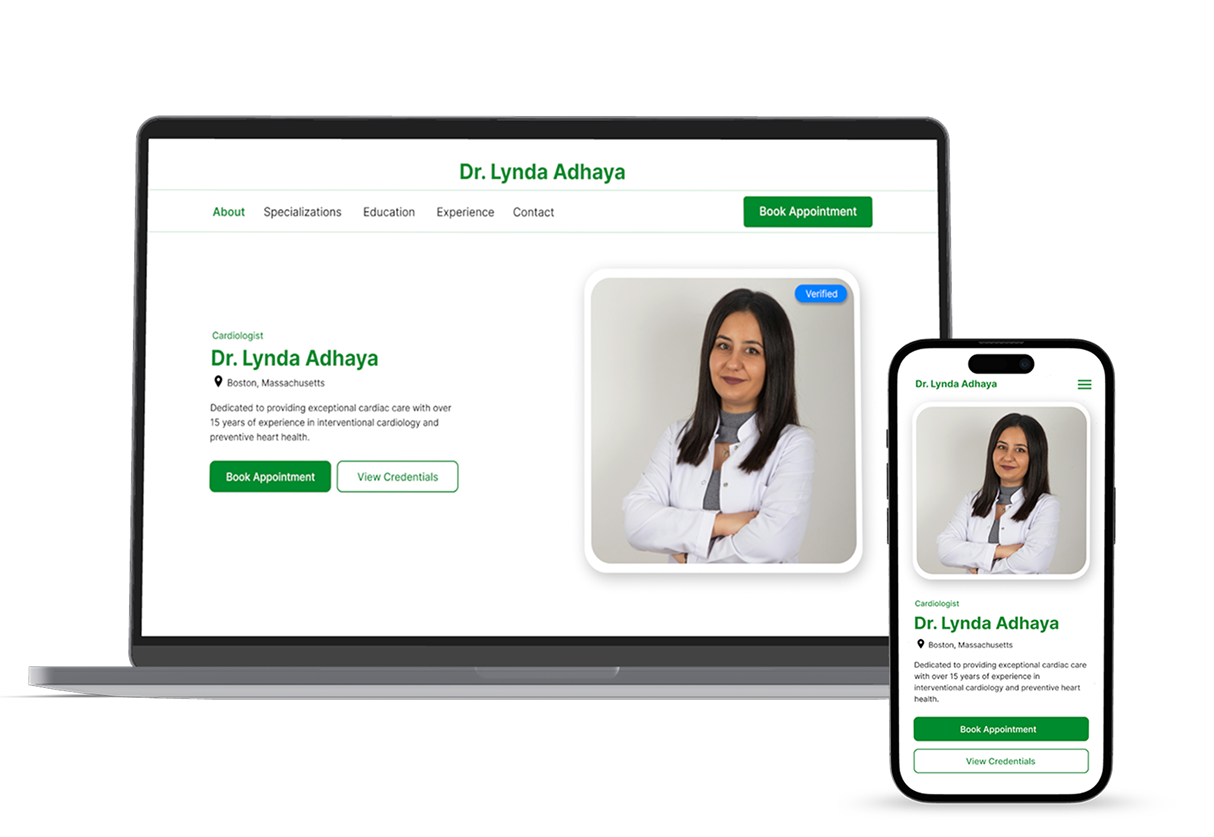
A modern SaaS that turns anyone’s professional identity into a beautiful, shareable online profile in minutes.
CASE STUDY
DESCRIBE360
The Problem We Set Out to Solve
Introduction
Long before Describe360 existed, professionals faced the same frustrating gap:
they needed a clean, digital presence — something better than PDFs, business cards, or messy personal pages — but they didn’t want the effort, cost, or complexity of building a full website.
Most existing platforms were either overkill (full site builders) or too generic (social links tools). What users really wanted was:
A digital business card — but one that could hold everything about them: skills, services, portfolio, media, documents, contact forms — all in one place, shareable instantly.
This clear need became our problem statement — and the foundation of Describe360.
Understanding Who It Was Built For
Persona
Describe360 is inherently broad in utility — but the core personas that helped shape it were:
Freelancers & Professionals
People needing a quick, polished online identity that shows work, services, and contact info without a full website.
Business Owners & Small Enterprises
Local shops, consultants, service providers, and startups wanting a digital presence customers can access anywhere.
Sales Professionals & Creators
Individuals who rely on quick sharing, lead capture, and multimedia showcasing — all from a simple link.
This product was built not for tech teams, but for everyday professionals who need digital presence without development overhead.
The Core Insight Behind Describe360
Product Direction
The biggest insight we followed was this:
People don’t just want a link — they want a presence.
A page that reflects who they are, what they do, and how they work — moved entirely out of the offline into one URL.
Unlike traditional “link aggregator” tools, Describe360 lets users show detailed services, portfolios, images, videos, documents, and even product info — all in one unified card.
How We Approached
Fast, Simple, Practical
We approached the product with one guiding philosophy:
Build a digital identity engine, not a site builder.
The goal was not to make users feel like they were building a website — but like they were crafting a professional presence.
So the building steps are:
Register — Sign up in minutes.
Create — Fill in your personal/business details.
Publish — Finalize and publish your profile URL.
Share — Use that link anywhere — messaging, social, email. Describe360
This sequence is intentionally linear, frictionless, and familiar to non-tech users.
Calm, Clean, and Human
Experience Design
The design philosophy was simple:
Users should feel confident instantly on the platform.
The UI had to be clear and non-intimidating, even for first-time digital creators.
Profile elements like About, Services, Gallery, YouTube embeds, Documents, and Contact had to feel self-expressive and professional, not templated or spammy. Describe360
This helped Describe360 become a bridge between real-world identity and online presence, not just another social link page.
Design Tools: The entire identity layer was prototyped in Figma, using atomic UI components to ensure consistency across web and mobile layouts.
A Practical SaaS First Version
The MVP
The MVP focused on delivering:
A simple profile builder with key sections
Multimedia support (images, videos, PDFs)
Unique shareable URLs
A customizable structure for professionals
Subscription-based publishing
24/7 tech support for onboarding and updates Describe360
Instead of adding complexity like team collaboration or advanced analytics, we doubled down on ease of use and speed to publish.
Meaningful Early Signals
The Metrics That Matter
Even with minimal marketing, Describe360 saw encouraging usage patterns:
Professionals created profiles that aggregated their work, skillsets, and contact info in one place. Describe360
Users shared their URL across social and messaging apps for networking. Describe360
The platform’s simplicity led to repeated edits — indicating users found ongoing value in updating their digital presence. Describe360
These are behavioural signals, not just numbers — and they show real product-market alignment.
nalytics Layer: Basic analytics were implemented using Plausible Analytics, giving us privacy-focused insight into profile visits, section engagement, and return behaviour.
Building Describe360
What We Learned
People don’t build profiles because they have to — they build them because it’s now expected digitally.
A digital presence is no longer optional — and the simpler it can be, the faster users adopt it.
That insight drove every design choice, every workflow decision, and every product feature.
Roadmap Beyond the MVP
What’s Next
Describe360’s future direction includes possibilities like:
🛠 Profile grouping for teams
📄 SEO enhancement for digital cards
✈️ Custom domain support
⛓️ Integration with other platforms (WhatsApp, LinkedIn, SEO snippets)
📊 Lightweight analytics for profile interactions — how often and where profiles are seen
The product will stay focused on presence & clarity, not complexity.
A 360° Presence in Minutes
Conclusion
Describe360 isn’t another website builder or link aggregator.
It’s a profile identity engine — built for the era where a shareable digital presence is essential, not optional.
It empowers professionals to create, publish, and share a professional digital presence in minutes — no code, no fuss.
This is why Describe360 matters today — and why its evolution continues to make sense in a world that expects presence everywhere at once.
WE BELIEVE
Best Stack for Our Clients
TESTIMONIALS
Our Client Says
“Our philosophy is built on people who are addicted on creating, learning, and growing together, which allows us to discover better others miss.”
View
Next Project
A digital identity platform for doctors. Product thinking, UI direction, and system architecture.
Learn More